
Knee Pain
- Home
- Knee Pain
Consult Parijatak for Ayurvedic Knee Pain Care
Knee pain is one of the most common problems experienced by people all across the globe. However, the severity of pain is mainly defined by the cause of knee pain that varies from person to person. The extent to which a person can bear the pain also becomes a contributing factor in the degree to which a person can experience the pain of the joint depending on various factors including:
- Genetical or body types VATA , VATA Pitta, VATA Kapha mostly
- on extent of high exertion with sedentary life style
- stress factor, high travelling , food mostly not nutritious it might junk etc.
- low immunity with multiple diseases prone to osteoarthritis which can degenerate knee mostly
- in women
- Injury
- Biological Aspect
- Environmental Conditions
- Physical Status
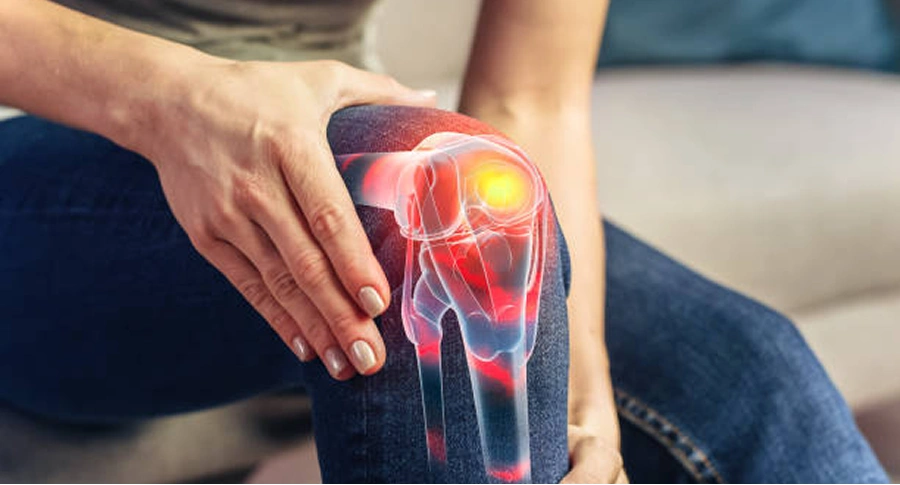
Know the Knee Pain
Knee pain is accompanied by various symptoms that all together contribute to extent of pain and discomfort caused. Here are some of the most common symptoms of knee pain:
- severe pain in knee joint as gradation of degeneration
- Joint stiffness
- Difficulty walking and stretching
- Cracking noise on movement of the affected knee
- Tender skin over the joint
- Redness over the knee area
- Swelling around the joint
- locking of knee joint
- Degeneration 1 2 3 or 4 th grade
- unable to walk & stand for long time or even for moment
- it may be affected one or both knee
Knee pain can result from various factors, ranging from injury and overuse to underlying medical conditions. Here are some common causes:
Injuries
- Ligament Injuries: Tears or sprains in the knee ligaments (ACL, PCL, MCL, and LCL) from sports or physical activities.
- Meniscus Tear: Damage to the knee’s shock-absorbing cartilage, often due to twisting motions.
- Tendinitis: Inflammation of the knee tendons, often from repetitive strain or overuse.
- Fractures: A broken kneecap or bones around the knee, typically from trauma.
Arthritis
- Osteoarthritis: Age-related wear and tear on knee cartilage, the most common type.
- Rheumatoid Arthritis: An autoimmune condition causing chronic inflammation in the joints, including the knee.
- Gout: A buildup of uric acid crystals in the knee joint can lead to sudden, severe pain.
- Septic Arthritis: Infection in the knee joint, causing pain, swelling, and redness.
Mechanical Problems
- Patellar Tracking Disorder: Misalignment of the kneecap, causing it to rub against the femur.
- Loose Body: A piece of bone or cartilage can break off and float around, causing pain.
- Iliotibial (IT) Band Syndrome: Tightness or inflammation in the IT band, often affecting runners.
Overuse and Strain
- Bursitis: Inflammation of the bursae, the fluid-filled sacs around the knee.
- Runner’s Knee (Patellofemoral Pain Syndrome): Pain around the kneecap due to overuse or poor alignment.
- Jumper’s Knee (Patellar Tendonitis): Stress on the patellar tendon from repetitive jumping.
Infections and Underlying Conditions
- Infections: Systemic infections like Lyme disease or localized infections can affect the knee.
- Chronic Conditions: Conditions like obesity can lead to increased strain on the knee, causing pain over time.
- Osgood-Schlatter Disease: Common in adolescents, it causes pain below the kneecap due to growth spurts and physical activity.
Know about the Knee Pain Treatment in Ayurveda
- Ashwagandha: The herbal plant has special therapeutic properties that work to reduce joint paint.
- Banyan: A topical application of banyan tree sap is known to be the most effective joint pain treatment.
- Garlic: The medical plant has proven benefits to resolve various health issues. Also works the best to reduce knee pain.
- Ginger: The herbal plant is traditionally valued for its anti-inflammatory properties and is used to ease joint discomfort.
- Turmeric: A pinch of turmeric consumed with water and honey on a daily basis makes it an excellent remedy for knee pain.
Moreover, some Ayurvedic measures or procedures work wonders to relieve the pain and provide high level of comfort. These procedures include:
- Hot & Cold Compress: This is an excellent Ayurvedic joint pain treatment with alternate hot and cold compression. The heat compression works to reduce pain and the cold compression reduces the inflammation of the joint.
- Abhyangam : The full body massage technique using medicated herbal oil is one way to increase blood circulation within the body and in turn pacify vata. This further works to lubricate the joints and empowers easy movement of the knee.
- Kizhi : The procedure using various herbs, sand, and rice tied all together in muslin cloth works to reduce pain and reduce inflammation of the joints.
- Upnaham: The therapy using herbal paste applied on the affected knee area works to initiate healing, strengthen muscles, and improves blood circulation. Thin in turn reduces pain and inflammation at the applied area.
Ayurvedic Treatment Principles for Knee Pain
Ayurveda takes a holistic approach to treating knee pain, focusing on balancing the Vata dosha, lowering inflammation, nourishing the joints, and improving general health. Ayurvedic therapies are based on the individual's constitution (Prakriti) and the severity of the ailment.
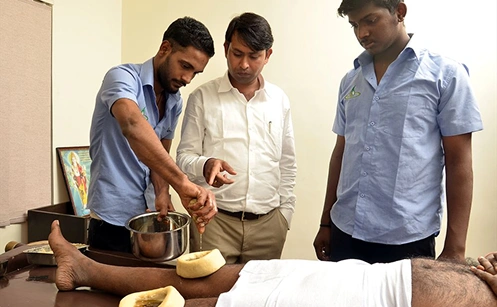
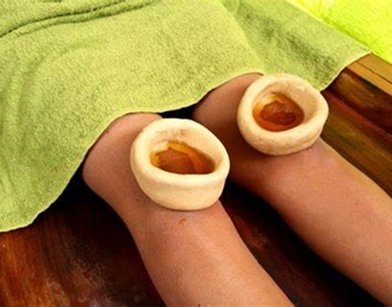
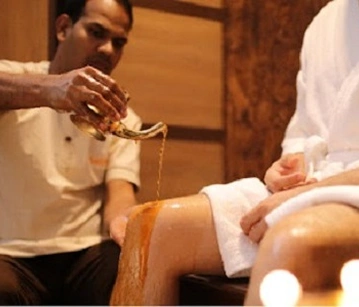
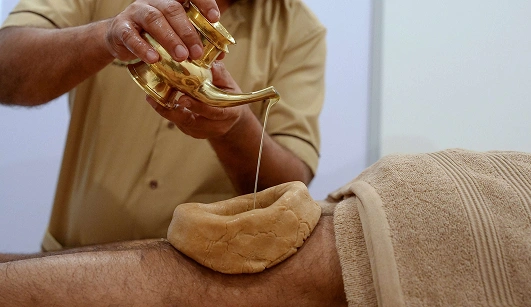
The key treatment strategies include:
Balance the Vata Dosha
Since knee discomfort is predominantly caused by an irritated Vata, the first step in Ayurvedic treatment is to calm and balance this dosha. The following approaches are utilized to do this.
Warm, moist therapies: To combat Vata's chilly, dry properties, heat is applied externally via oil massages, steam baths, and herbal fomentation.
Nourishing diet: A Vata-pacifying diet rich in warm, moist, and unctuous foods such as ghee, soups, and cooked vegetables helps nourish and lubricate the joints.
Herbal formulations: The use of certain herbs with anti-inflammatory and joint-strengthening characteristics, such as Guggulu, Ashwagandha, and Shatavari, is critical in the treatment of knee discomfort.
Herbal Remedies and Formulas
Herbal Remedies and Formulas
Ayurveda uses a wide range of herbal preparations to treat knee pain. Some of the most effective plants and formulas are:
Guggulu (Commiphora mukul) is a highly effective anti-inflammatory herb used in Ayurveda. It is especially beneficial for treating osteoarthritis and rheumatoid arthritis. Guggulu reduces pain, edema, and stiffness in the knee joint by balancing Vata and eliminating Ama.
Ashwagandha (Withania somnifera): Known for its adaptogenic and regenerative characteristics, Ashwagandha is used to strengthen the muscles and ligaments that surround the knee. It increases flexibility, decreases stiffness, and promotes tissue repair.
Shallaki (Boswellia serrata) is a well-known herb for its ability to relieve joint pain and inflammation. Its main ingredient, boswellic acid, slows cartilage deterioration and improves mobility in people with osteoarthritis.
Nirgundi (Vitex negundo): Often used as an oil or paste, Nirgundi is administered externally to relieve joint swelling and pain.
Rasna (Pluchea lanceolata) is another plant known for its ability to calm Vata and relieve joint discomfort. It is frequently used in conjunction with other herbs in decoctions or formulations.
Detoxification therapies (Panchakarma)
Ayurveda emphasizes the importance of cleansing in removing accumulated Ama and restoring dosha balance. Panchakarma, a series of five detoxification procedures, is frequently prescribed for chronic knee pain and joint issues. The most often utilized techniques for knee discomfort are:
Virechana (Therapeutic Purgation): This procedure uses laxatives to cleanse the bowels and eliminate toxins from the body. Virechana is very effective in removing excess Pitta and Vata from the body, which can exacerbate joint discomfort.
Basti (Medicated Enema): Basti is a highly effective treatment for Vata-related conditions such as osteoarthritis and knee discomfort. Medicated oils or decoctions are provided rectally to balance Vata and nourish the joints. Basti helps to reduce inflammation, increase mobility, and relieve chronic pain.
Dietary and lifestyle modifications
Ayurvedic treatment for knee pain involves dietary and lifestyle adjustments to promote recovery and prevent further worse of the illness. Some essential dietary suggestions are:
Soups, stews, ghee, whole grains, and root vegetables are examples of vata-friendly cuisine. Avoid cold, dry, and uncooked foods, as these might worsen Vata.
Herbal supplements: Ayurvedic medicines such as Triphala for digestion and Dashamoola for joint health can aid in the body's natural healing process.
Moderate exercise: Gentle physical activity, such as yoga or walking, is recommended to keep joints mobile without straining the knees.
Experience Holistic Healing at Parijatak Ayurveda
To conclude, Ayurvedic care aims to ease knee pain and support joint comfort while strengthening muscles, improving blood circulation, and increasing mobility of the affected knee. Parijatak based in the Central India offers personalised Ayurvedic care, including for knee ligament problems, under the able guidance of expert Ayurvedic specialists
Thank you
We have your details and will call you shortly.