
Ayurvedic diet, as the Samhitas teach it
Food is the first medicine in Ayurveda. This guide brings together what Charaka, Sushruta and Vagbhata teach about how, what, how much and when to eat, with the original verses explained simply, so you can start today and know when to ask a vaidya.
आहारसम्भवं वस्तु रोगाश्चाहारसम्भवाः ।
हिताहितविशेषाच्च विशेषः सुखदुःखयोः ॥
āhārasambhavaṃ vastu rogāś cāhārasambhavāḥ |
hitāhitaviśeṣāc ca viśeṣaḥ sukhaduḥkhayoḥ ||
Meaning: The body is born of food, and so are diseases. The difference between wholesome and unwholesome food is the difference between happiness and suffering.
— Charaka Samhita, Sutrasthana 28.45
Why food comes first: Agni
Charaka names three supports of life: food, sleep and a disciplined life (Charaka Samhita, Sutrasthana 11). Food stands first. But in Ayurveda, food nourishes only when it is digested well, and digestion depends on Agni, the digestive fire.
That is why an Ayurvedic doctor asks about your appetite, bowels, tongue and energy before talking about any food. The same meal can strengthen one person and burden another, depending on the state of their Agni.
Signs your Agni is working well
- Real hunger at meal times, not constant craving
- A light body and clear mind after meals
- Clean belching, no bloating or burning
- Regular, comfortable bowels
- A clean tongue in the morning
- Sound sleep and steady energy
आयुर्वर्णो बलं स्वास्थ्यमुत्साहोपचयौ प्रभा ।
ओजस्तेजोऽग्नयः प्राणाश्चोक्ता देहाग्निहेतुकाः ॥
शान्तेऽग्नौ म्रियते युक्ते चिरं जीवत्यनामयः ।
रोगी स्याद्विकृते मूलमग्निस्तस्मान्निरुच्यते ॥
āyur varṇo balaṃ svāsthyam utsāhopacayau prabhā |
ojas tejo'gnayaḥ prāṇāś coktā dehāgnihetukāḥ ||
śānte'gnau mriyate yukte ciraṃ jīvaty anāmayaḥ |
rogī syād vikṛte mūlam agnis tasmān nirucyate ||
Meaning: Life span, complexion, strength, health, enthusiasm, growth, lustre, ojas, warmth, the other agnis and the vital breath all depend on the body's fire. When it is extinguished, one dies; when it is balanced, one lives long and free of illness; when it is disturbed, one falls ill. So Agni is called the root.
What it means for you: Protect your digestion first. Most of the rules on this page are ways of keeping Agni steady.
— Charaka Samhita, Chikitsasthana 15.3–4
Charaka's ten rules of eating
Before he says what to eat, Charaka says how. These ten rules apply to every meal, whatever your constitution.
उष्णमश्नीयात् । स्निग्धमश्नीयात् । मात्रावदश्नीयात् । जीर्णेऽश्नीयात् । वीर्याविरुद्धमश्नीयात् ।
इष्टे देशे इष्टसर्वोपकरणं चाश्नीयात् । नातिद्रुतमश्नीयात् । नातिविलम्बितमश्नीयात् ।
अजल्पन्नहसन् तन्मना भुञ्जीत । आत्मानमभिसमीक्ष्य भुञ्जीत सम्यक् ॥
uṣṇam aśnīyāt | snigdham aśnīyāt | mātrāvad aśnīyāt | jīrṇe'śnīyāt | vīryāviruddham aśnīyāt |
iṣṭe deśe iṣṭasarvopakaraṇaṃ cāśnīyāt | nātidrutam aśnīyāt | nātivilambitam aśnīyāt |
ajalpann ahasan tanmanā bhuñjīta | ātmānam abhisamīkṣya bhuñjīta samyak ||
Meaning: Eat warm food; eat food with some unctuousness; eat in the right quantity; eat after the previous meal is digested; eat foods that do not oppose each other in potency; eat in a pleasant place with all you need; do not eat too fast; do not eat too slowly; eat without talking or laughing, with full attention; and eat after considering what suits you.
— Charaka Samhita, Vimanasthana 1.24
The right quantity: Matra
Charaka opens a whole chapter with two words: eat in measure. And the measure is not fixed: it depends on the strength of your digestion, which changes with your age, the season, your work and even the time of day.
In Vimanasthana 2 he gives a simple picture: think of the stomach in three parts. Fill one with solid food, one with liquids, and leave one empty for digestion to work.
Signs of the right quantity, as Charaka describes them: no pressure in the stomach or chest, no heaviness, the senses satisfied, hunger and thirst settled, and ease in standing, sitting, walking and breathing afterwards.
मात्राशी स्यात् ।
आहारमात्रा पुनरग्निबलापेक्षिणी ॥
mātrāśī syāt |
āhāramātrā punar agnibalāpekṣiṇī ||
Meaning: One should eat in the right measure. And the measure of food depends on the strength of one's digestive fire.
What it means for you: Stop when you feel satisfied, before you feel full. A lighter, earlier dinner is the easiest place to start.
— Charaka Samhita, Sutrasthana 5.3
The six tastes (Shad Rasa)
Ayurveda describes every food by its taste, and each taste moves the doshas in a known direction. A balanced day includes all six, with more of those your body needs.
रसाः स्वाद्वम्ललवणतिक्तोषणकषायकाः ।
षड् द्रव्यमाश्रितास्ते च यथापूर्वं बलावहाः ॥
तत्राद्या मारुतं घ्नन्ति त्रयस्तिक्तादयः कफम् ।
कषायतिक्तमधुराः पित्तमन्ये तु कुर्वते ॥
rasāḥ svādvamlalavaṇatiktoṣaṇakaṣāyakāḥ |
ṣaḍ dravyam āśritās te ca yathāpūrvaṃ balāvahāḥ ||
tatrādyā mārutaṃ ghnanti trayas tiktādayaḥ kapham |
kaṣāyatiktamadhurāḥ pittam anye tu kurvate ||
Meaning: The tastes are sweet, sour, salty, bitter, pungent and astringent. These six reside in substances, and each gives more strength than the one after it. The first three subdue Vata; the three beginning with bitter subdue Kapha; astringent, bitter and sweet subdue Pitta. The others increase them.
— Ashtanga Hridaya, Sutrasthana 1.14–15
Eat for your dosha
Your Prakriti, the balance of Vata, Pitta and Kapha you were born with, decides which foods suit you best. Most people are a mix of two. A vaidya can assess yours at a consultation.
Vata
Qualities: dry, light, cold, rough, mobile.
Favour: warm, moist, grounding food; ghee; sweet, sour and salty tastes; regular meals.
Reduce: cold, dry and raw food; skipped meals; late nights.
Pitta
Qualities: hot, sharp, slightly oily, light, liquid.
Favour: cooling, mild food; ghee; sweet, bitter and astringent tastes; meals on time.
Reduce: chilli, fried, sour and fermented food; alcohol; eating in the heat.
Kapha
Qualities: heavy, cold, soft, oily, stable.
Favour: light, warm, well-spiced food; millets and barley; pungent, bitter and astringent tastes.
Reduce: sweets, heavy dairy, curd at night, day sleep.
Eat with the season (Ritucharya)
The same diet is not right all year. Ayurveda divides the year into six seasons and adjusts food to each. The months below are approximate for Nagpur.
तस्याशितीयादाहाराद्बलं वर्णश्च वर्धते ।
यस्यर्तुसात्म्यं विदितं चेष्टाहारव्यपाश्रयम् ॥
tasyāśitīyād āhārād balaṃ varṇaś ca vardhate |
yasyartusātmyaṃ viditaṃ ceṣṭāhāravyapāśrayam ||
Meaning: The strength and complexion of a person grow from the food he eats when he knows which food and activity suit each season.
What it means for you: Change your plate with the season. Right now, in Hemanta, digestion is strong: it is a time for nourishing food.
— Charaka Samhita, Sutrasthana 6.3
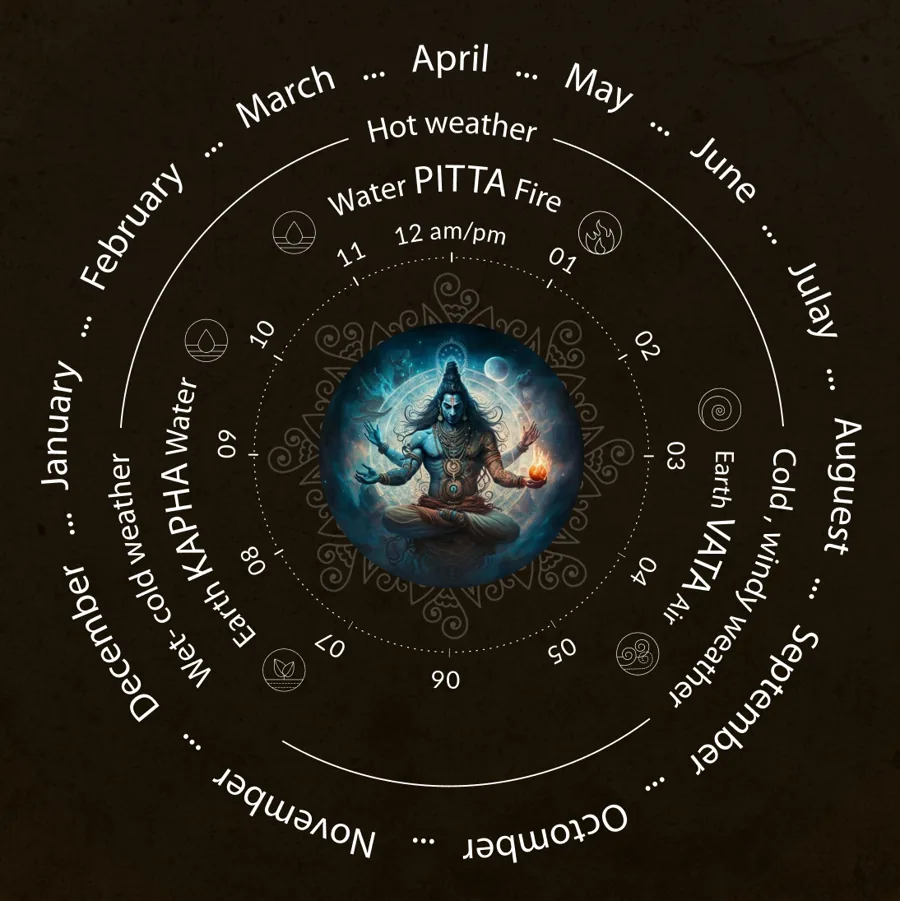
Cold and dry; Kapha builds up. Keep the warm, nourishing winter diet.
Kapha melts. Lighter food, barley, old grains, a little honey; less sweet and heavy.
Hot and draining. Sweet, cool, liquid food; rice, milk, ghee; less salty, sour and spicy.
Digestion weakens, Vata rises. Light, warm, freshly cooked food; boiled water.
Pitta flares. Sweet, bitter, light food; ghee; avoid curd, chilli and sour.
Digestion is strongest. Nourishing food, ghee, sesame, jaggery, warm water.
Foods that clash (Viruddha Ahara)
Some foods are fine alone but troublesome together, or at the wrong time. Charaka lists them in Sutrasthana 26.
One of the best-known combinations the texts warn against.
Including milkshakes made with sour fruit.
Never cook honey or stir it into very hot drinks.
Charaka advises against curd at night (Sutrasthana 7).
Ayurvedic diet guides
Practical guides for your dosha, the season and everyday complaints, each with its classical sources.
A diet written for you
General rules are a start. A vaidya looks at your Prakriti, your Agni, the season and any condition you have, and writes a diet you can follow.
Consultation
A full history, pulse, tongue and Prakriti assessment with Dr Nitesh Khonde (BAMS, MD Medicine) or the Parijatak vaidyas. In Nagpur or online.
Your written plan
What to eat and avoid, meal times and daily routine, in the Parijatak Care app, alongside any medicines or Panchakarma the doctor advises.
Follow-ups
The plan is adjusted as your digestion and the season change. Follow-up consultations for one year at the follow-up fee.
Common questions about the Ayurvedic diet
Is an Ayurvedic diet vegetarian?
The classical texts describe both vegetarian and non-vegetarian foods. Many people today follow a vegetarian Ayurvedic diet; the vaidya plans for what you eat.
Do I have to give up tea and coffee?
Not always. Less is better, and not on an empty stomach or late in the day. The doctor will advise for your constitution.
Which is the best diet for everyone?
There is no single best diet in Ayurveda. The right diet depends on your Prakriti, your digestion, the season and your health.
Can I follow an Ayurvedic diet with my current medicines?
Yes. Please keep taking the medicines your doctor prescribed and tell the vaidya about them, so the plan fits alongside.
How do I get a personal diet plan?
Book a consultation in Nagpur or online. You receive a written plan for food and routine in the Parijatak Care app.
This page is general information and not a substitute for a consultation. Treatment is decided by the doctor after examining you, and Ayurvedic care is given alongside — not instead of — the care of your regular doctor.