
Kusha
कुश
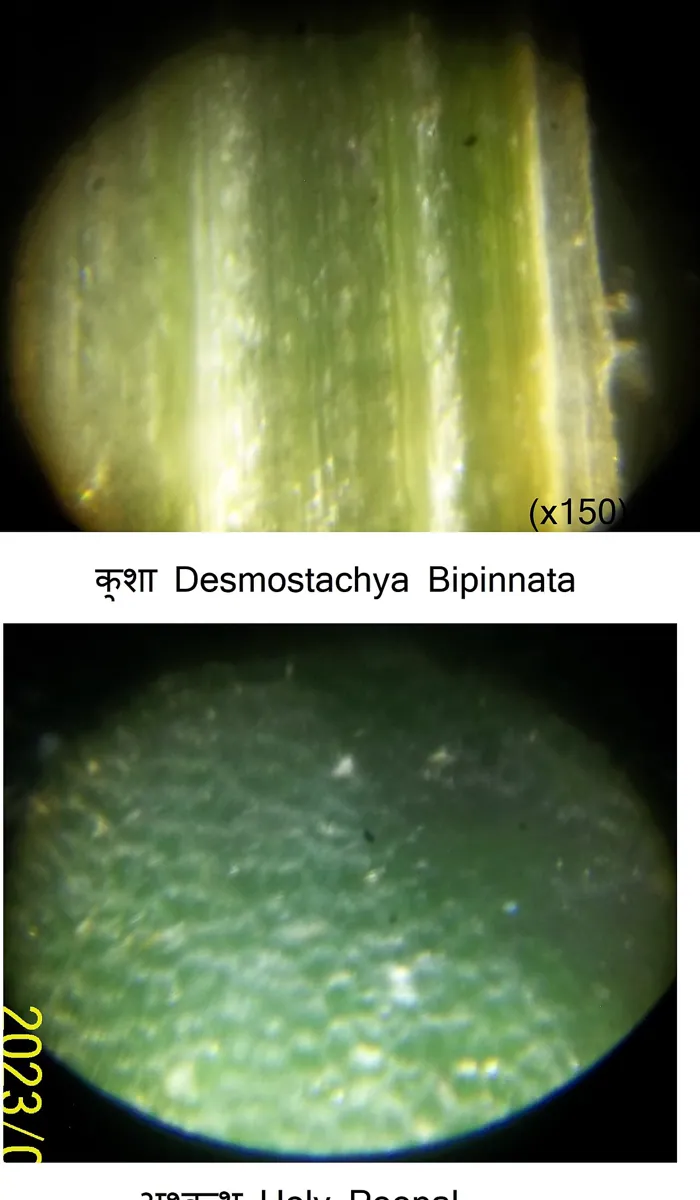
Kusha is a sacred grass used in Ayurveda for burning urination, stones and bleeding.
Rasa (taste)मधुर,कषाय (sweet, astringent)
Guna (qualities)लघु,स्निग्ध (light, unctuous)
Virya (potency)शीत (cold)
Vipaka (post-digestive effect)मधुर (sweet)
Main action (karma)मूत्रविरेचनीय (diuretic)
Part usedमूल (root)
Classical dose (adult)50-100 ml — only as your vaidya prescribes
About Kusha
Kusha is used in Hindu rituals.
In the classical texts
- Charaka Samhita (Sutrasthana 4)Part of Trinapanchamula.
Synonyms (paryaya)
यज्ञभूषन,सूच्यग्र
yajñabhūṣana,sūcyagra
Effect on the three doshas
VataCalms
PittaCalms
KaphaCalms
How vaidyas use it in practice
- Trinapanchamula kwatha.
Simple home uses
- Not usually a home remedy.
For minor complaints only. If a problem lasts more than a few days or is severe, see a doctor.
Well-known formulations
तृणपंचमूल क्वाथ
tṛṇapaṃcamūla kvātha
What science says
Diuretic effects.
Safety and cautions
Safe.
Who should not take it
- None in usual use
How to identify it, and common adulterants
Sharp-edged tall grass.
Growing it at home
Wild.
Questions people ask
Is Kusha same as Darbha?
Close relatives used together.
Want to know whether this herb suits your body type? Speak to a Parijatak vaidya.Book a consultation
This page is general information from classical Ayurvedic texts and published research. It is not a prescription. Herbs act differently in different people; take any herb only after a qualified vaidya examines you, and do not stop prescribed medicines.