
Kantakari
Kantakari is a spiny nightshade used in Ayurveda for cough, asthma, cold, fever and as part of Dashamula.
About Kantakari
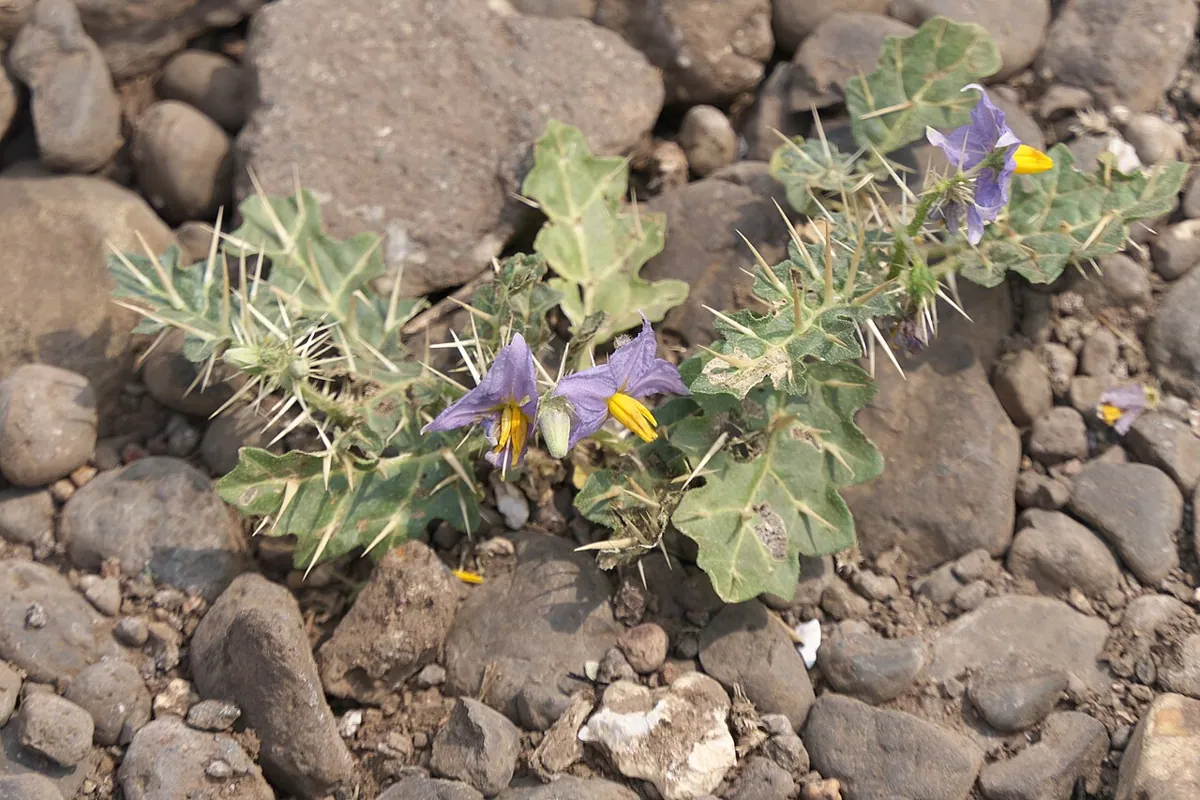
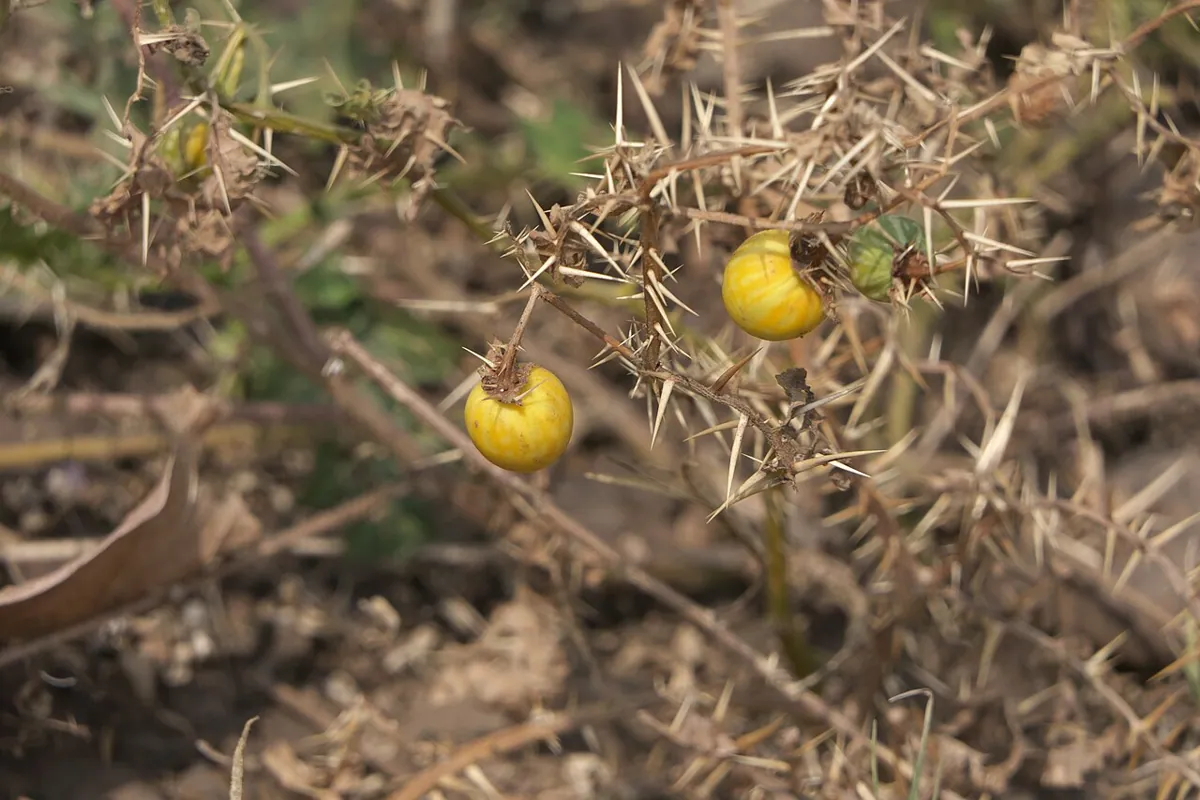
Kantakari is a prickly, spreading herb with purple flowers and yellow berries, common on dry wasteland across India. The whole plant is used. It is one of the ten roots of Dashamula and the base of Kantakari avaleha for cough.
Shloka from Bhavaprakasha Nighantu
कण्टकारी सरा तिक्ता कटुका दीपनी लघुः। रूक्षोष्णा पाचनी कासश्वासज्वरकफानिलान्॥
kaṇṭakārī sarā tiktā kaṭukā dīpanī laghuḥ| rūkṣoṣṇā pācanī kāsaśvāsajvarakaphānilān||
निहन्ति पीनसं पार्श्वपीडाकृमिहृदामयान्॥
nihanti pīnasaṃ pārśvapīḍākṛmihṛdāmayān||
Meaning: Kantakari is laxative, bitter, pungent, kindles digestion and is light. It is dry and hot, digests, and removes cough, breathlessness, fever, Kapha and Vata. It also removes chronic cold, side pain, worms and heart disorders.
Bhavaprakasha Nighantu, Guduchyadi varga
In the classical texts
- Charaka Samhita (Sutrasthana 4)Included in the Kasaghna (cough) group and in Laghu Panchamula, so part of Dashamula.
- Charaka Samhita (Sutrasthana 25)Named the best among herbs for cough.
- Bhavaprakasha Nighantu (Guduchyadi varga)Described with the shloka above.
Synonyms (paryaya)
दुस्पर्शा,क्षुद्रा,व्याघ्री,निदिग्धिका
dusparśā,kṣudrā,vyāghrī,nidigdhikā
Classical indications
पाचन, कास, ज्वर, कफवातशामक, पीनस, पार्श्वपीङा, कृमि, हृद्रोग, मूत्रल
pācana, kāsa, jvara, kaphavātaśāmaka, pīnasa, pārśvapīṅā, kṛmi, hṛdroga, mūtrala
Effect on the three doshas
How vaidyas use it in practice
- Kantakari avaleha or Vyaghri haritaki for chronic cough and asthma.
- Kantakari decoction with Pippali for cold with mucus.
- In Dashamula preparations.
- Smoke of seeds was a traditional remedy for toothache (not advised now).
Simple home uses
- Not usually a home remedy; use prepared avaleha or decoction as advised.
For minor complaints only. If a problem lasts more than a few days or is severe, see a doctor.
Well-known formulations
कण्टकारी घृत, व्याघ्रीहरीतकी
kaṇṭakārī ghṛta, vyāghrīharītakī
What science says
The plant contains steroidal alkaloids (solasodine), glycoalkaloids and flavonoids. Small studies have looked at bronchial asthma, with improvement in airflow.
Safety and cautions
Unripe berries contain solanine-type alkaloids and should not be eaten. Avoid in pregnancy and in Pitta-type bleeding.
Who should not take it
- Pregnancy
- Bleeding disorders
- Eating the berries
How to identify it, and common adulterants
Spiny, spreading herb with purple flowers and round yellow berries with green stripes when young. Solanum surattense is the official species; other spiny Solanums are substituted.
Growing it at home
Grows wild on wasteland; it can be grown from seed in any dry soil but has sharp spines.
Questions people ask
Is Kantakari good for asthma?
It is one of the main classical herbs for breathlessness, usually as Kantakari avaleha, alongside the doctor's treatment.
Which Dashamula group is it in?
The smaller group (Laghu Panchamula).
This page is general information from classical Ayurvedic texts and published research. It is not a prescription. Herbs act differently in different people; take any herb only after a qualified vaidya examines you, and do not stop prescribed medicines.