
Ativisha
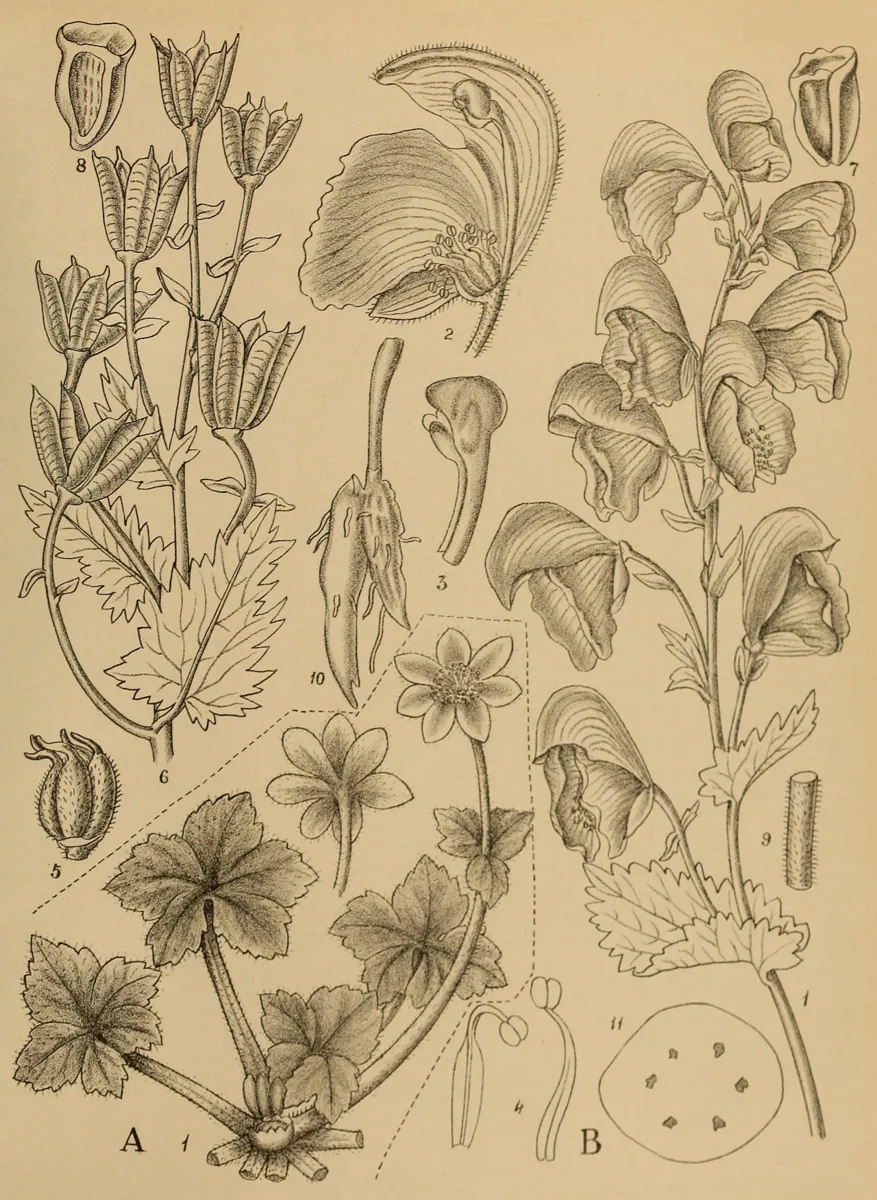
Ativisha is the gentle, non-toxic aconite used in Ayurveda for children's fever, diarrhoea, cough and indigestion.
About Ativisha
Ativisha is a perennial herb of the high Himalaya whose small tuberous root is the medicine. Unlike other Aconitum species, it is not poisonous, which is why it is famous as a children's herb. It is now endangered in the wild.
Shloka from Bhavaprakasha Nighantu
विषा तूष्णा कटुस्तिक्ता पाचनी दीपनी हरेत्। कफपित्तातिसारामविषकासवमिकृमीन्॥
viṣā tūṣṇā kaṭustiktā pācanī dīpanī haret| kaphapittātisārāmaviṣakāsavamikṛmīn||
Meaning: Visha (Ativisha) is hot, pungent and bitter; it digests and kindles digestion, and removes Kapha, Pitta, diarrhoea, ama, poison, cough, vomiting and worms.
Bhavaprakasha Nighantu, Haritakyadi varga
In the classical texts
- Charaka Samhita (Sutrasthana 4)Included in the Lekhaniya and Arshoghna groups.
- Charaka Samhita (Sutrasthana 25)Named the best among herbs that digest ama, kindle digestion and bind the stool.
- Bhavaprakasha Nighantu (Haritakyadi varga)Described with the shloka above.
- Kashyapa Samhita and paediatric practiceBalachaturbhadra and similar children's formulas contain Ativisha.
Synonyms (paryaya)
भंगुरा,शुक्ल्कन्दा,घुणवल्लभा,काश्मीरा,शिशुभैषज्या
bhaṃgurā,śuklkandā,ghuṇavallabhā,kāśmīrā,śiśubhaiṣajyā
Classical indications
पाचक, अग्निदीपक, ग्राही, ज्वरहर, संग्रहणी, विष, कृमि, वमन
pācaka, agnidīpaka, grāhī, jvarahara, saṃgrahaṇī, viṣa, kṛmi, vamana
Effect on the three doshas
How vaidyas use it in practice
- Balachaturbhadra churna (Ativisha, Musta, Pippali, Karkatashringi) for children's cough, fever and loose stools, as the paediatric vaidya decides.
- In adults, with Musta for diarrhoea and indigestion.
- In fever formulas.
Simple home uses
- Not to be given at home without the vaidya's dose, even though it is mild.
For minor complaints only. If a problem lasts more than a few days or is severe, see a doctor.
Well-known formulations
अतिविषादि चूर्ण, बालचतुर्भद्रा
ativiṣādi cūrṇa, bālacaturbhadrā
What science says
The roots contain non-toxic diterpene alkaloids (atisine, hetisine) rather than the toxic aconitine of other aconites. Laboratory studies show anti-diarrhoeal and anti-inflammatory effects.
Safety and cautions
Correct identification is essential because poisonous aconites look similar. Use only from licensed pharmacies. Endangered: use sustainable sources.
Who should not take it
- Any product of unknown source (risk of toxic aconite substitution)
How to identify it, and common adulterants
Small, cone-shaped, grey-white tubers that are white and starchy inside and bitter. Toxic Vatsanabha roots are larger and darker; only a pharmacy should supply Ativisha.
Growing it at home
A protected alpine plant; it cannot be grown in the plains.
Questions people ask
Is Ativisha poisonous like other aconites?
No. It is the non-toxic aconite, which is why it is used for children. But substitution with toxic aconite is possible, so buy only from a pharmacy.
Why is it given to children?
It is mild, digestive and works for all three doshas, making it suited to children's cough, fever and diarrhoea.
This page is general information from classical Ayurvedic texts and published research. It is not a prescription. Herbs act differently in different people; take any herb only after a qualified vaidya examines you, and do not stop prescribed medicines.